You can maximize a smart apartment by defining 2–3 distinct zones (sleep, lounge, work) and using vertical, no-drill storage solutions.
- Zone Planning: Maintain 30–36 inch circulation paths between furniture.
- Lighting: Use 2700–3000K LED bulbs to expand perceived space.
- Storage: Utilize vertical tension rods and over-door organizers.
- Protection: Document move-in conditions with dated video to prevent unfair deductions.
Read on for specific layout templates and damage-free decorating hacks to upgrade your rental.
How Can I Optimize a Small Apartment Layout?
You can optimize a small apartment layout by prioritizing 2–3 distinct zones and selecting furniture that fits specific circulation rules. Research suggests measuring open dimensions for extendable pieces and maintaining 30–36 inches (75–90 cm) for main walkways to prevent cramping.
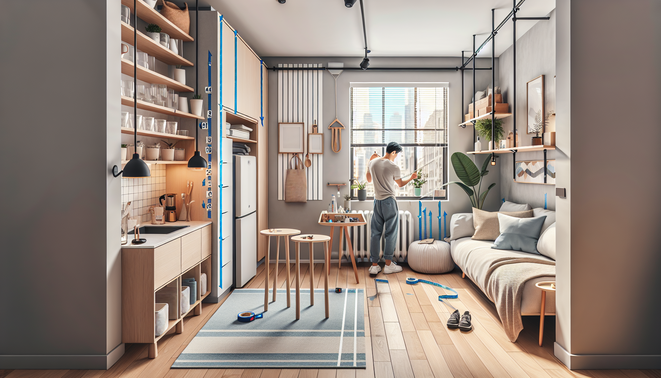
Start by measuring and mapping: record room length/width, window and door locations, vents, and fixed elements. Draw a to‑scale floor plan (graph paper or a free app) so you can test placements before buying—taping out footprints on the floor helps verify circulation.
- Zones: Prioritize sleep, lounge, work, and eating. In a studio, limit to 2–3 zones and anchor each to a focal piece (bed, sofa, desk).
- Clearances to check: Designers typically recommend sofa to coffee table gaps of 12–18 in (30–45 cm) and at least 24 in (60 cm) clearance on one side of a bed. According to Apartment Therapy, following these placement rules helps avoid cramped layouts.
- Measure open dimensions: A pull‑out sleeper or drop‑leaf table needs space to extend; always confirm pieces fit through doors, elevators, and halls.
Multifunctional Furniture Comparison
To maximize utility, compare these common space-saving options:
| Furniture Type | Best For | Pros | Cons |
|---|---|---|---|
| Sofa Bed | Guest hosting | Dual-purpose seating and sleeping | Heavy; requires clearance to open |
| Daybed | Studio apartments | Smaller footprint; standard mattress comfort | Less seating depth than sofas |
| Nesting Tables | Flexible entertaining | Expands when needed; stores compactly | Smaller surface area individually |
| Drop-Leaf Table | Dining/Work | Adjustable surface size | Mechanism can limit legroom |
Quick tips: use vertical storage and rugs/lighting to define zones, mock layouts with painter’s tape, and ask for help sketching a plan if you share room dimensions and existing furniture.
What Are the Best No‑Drill Storage Solutions?
The best no-drill storage solutions utilize vertical tension and adhesive technology to gain usable space without risking lease violations. Options like tension rods and over-door organizers allow renters to maximize capacity while avoiding deposit deductions for wall damage.
No‑drill options let you gain usable space without risking lease violations. Document before/after photos whenever you install or remove anything.
- Tension rods: These are effective for under‑sink dividers, lightweight shelving, or hanging cleaners. They are cheap and repositionable, though users should watch weight limits (Apartment Therapy).
- Over‑door organizers: These provide instant behind‑the‑door space for shoes, toiletries, or pantry items. Measure door thickness and protect paint with felt. Reviews suggest these are adjustable for various door heights (Apartment Therapy).
- Freestanding shelving: Maximize vertical space; use anti‑tip straps or adhesive anchors if drilling isn’t allowed and keep heavy items low.
- Adhesive hooks/strips: Command hooks are effective for light/medium loads when used per instructions. Follow removal steps precisely to avoid paint damage (Command / 3M).
Practical hacks include using bed risers for under‑bed bins, magnetic strips inside cabinet doors, and clear labeled bins for stacked storage. Legal resources like Nolo recommend date/photo documentation of these setups to protect your deposit.
How Can I Make My Apartment Look Bigger?
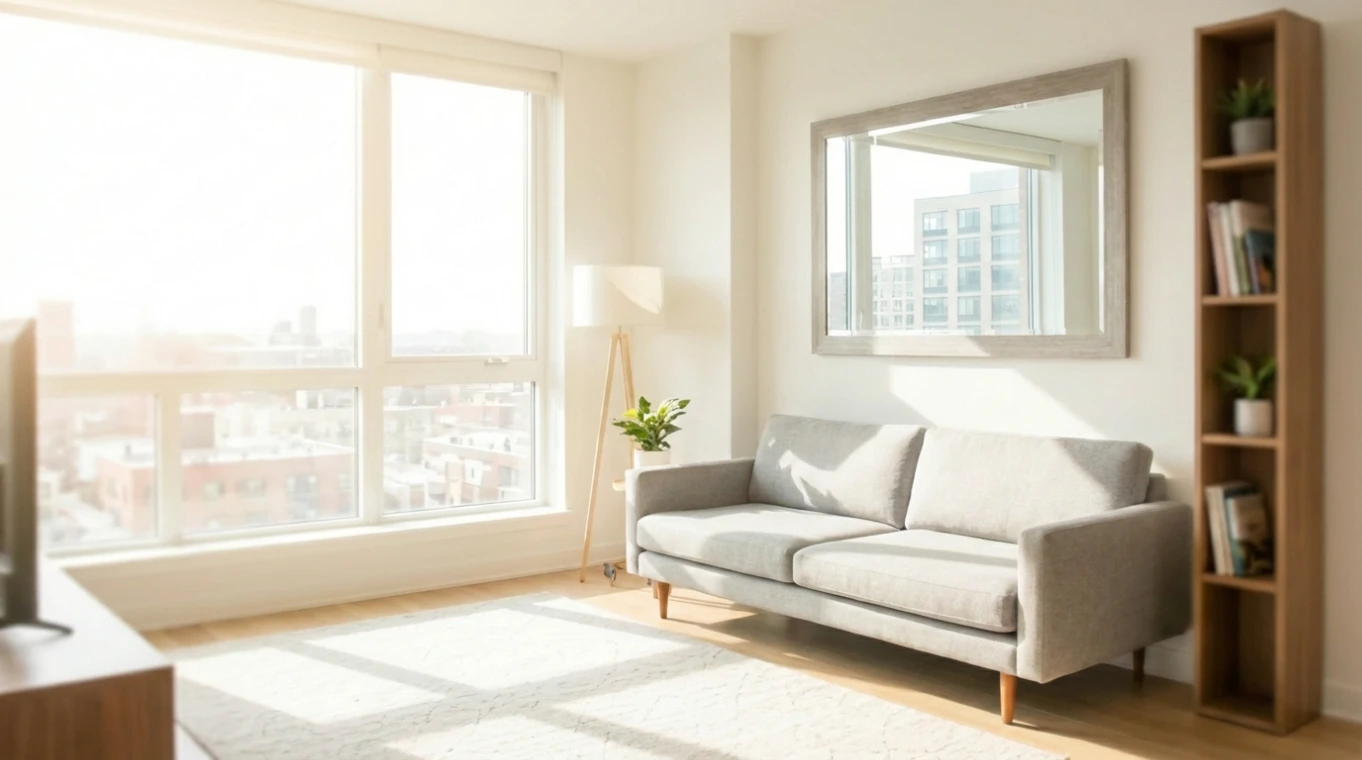
You can make a small apartment look bigger by using light colors, mirrors, and layered lighting to trick the eye. Designers recommend placing mirrors opposite windows to double natural light and using 2700–3000K LED bulbs to create a warm, expansive atmosphere.
Use light colors, layered lighting, and careful scale to expand visual space without major expense.
- Color: Keep base walls light warm‑cool balanced (soft greige or warm off‑white) and use one low‑commitment accent (peel‑and‑stick wallpaper or painted shelf back). Consistent wall color across connected spaces keeps sightlines flowing.
- Lighting: Layer ambient, task, and accent light with plug‑in floor lamps, clamp lamps, and LED puck lights. According to Energy.gov, you should choose 2700–3000K for living spaces and prioritize lumens over wattage.
- Mirrors & rugs: Hang a mirror opposite a window to double natural light, use one larger rug to unify seating, and pick low‑profile furniture with exposed legs. Apartment Therapy notes that keeping sightlines open is key to visual expansion.
Before/after styling: Remove excess seating, lay a larger rug to unify zones, and add a tall mirror and layered lamps for instant perceived space. For palette ideas, see the 2026 Color Collection.
How Do I Protect My Security Deposit?
You can protect your security deposit by documenting the unit’s condition with dated photos and videos immediately upon move-in and adhering to a strict cleaning timeline before move-out. Experts advise creating a digital paper trail of all pre-existing damage to avoid liability for wear and tear.
Follow a timeline: do a photo/video inventory on move‑in day, deep clean in the first week, maintain monthly, and start move‑out prep two weeks before leaving.
Photo inventory & documentation
Record continuous video narration (say the date aloud) and take dated photos of walls, floors, appliances, and any pre‑existing damage. Save and backup to cloud storage, and email copies to the landlord. Zillow recommends this as a standard move-out practice.
Room‑by‑room checklist (highlights)
- Kitchen: Clean cabinets, degrease stove, photograph appliance model plates.
- Bathroom: Descale showerhead, scrub grout, document caulk and plumbing.
- Living/bedroom: Vacuum baseboards, fill small nail holes with spackle, use a melamine sponge for scuffs.
- Entry/floors/balcony: Sweep/mop, remove adhesive residue, photograph balcony rails/drains.
- Appliances/utilities: Clean filters and photo meter readings. A rental walkthrough checklist helps avoid disputes (Apartments.com).
Two weeks before move‑out: run full cleaning, collect receipts, schedule final walkthrough, and bring your move‑in photos/video. If deductions are proposed, request an itemized list with receipts and consult local rules. For example, California Courts outline specific procedures and timelines for security deposit returns.
Frequently Asked Questions
What are the best colors for small apartments?
Light, warm-cool balanced neutrals like soft greige or off-white. These shades reflect light effectively, making spaces feel larger. Designers recommend keeping the wall color consistent across connected rooms to maintain visual flow, using peel-and-stick wallpaper only for small accents.
How much clearance do I need around furniture?
At least 30–36 inches for main walkways. For specific furniture, allow 12–18 inches between a sofa and coffee table, and 24 inches on at least one side of a bed. These measurements prevent cramping and ensure safe, comfortable movement throughout the apartment.
Can I use command strips in a rental?
Yes, if used correctly. Command strips are effective for light to medium loads. To avoid paint damage (and deposit deductions), follow the application and removal instructions precisely. Always check the weight rating on the package before hanging items.
How do I document rental damage?
Take dated photos and continuous video narration. Do this immediately upon move-in and again at move-out. Email these files to your landlord to create a time-stamped record. This evidence is crucial for disputing unfair security deposit deductions later.
What is the best bed for a studio apartment?
A daybed or a quality sofa bed. A daybed offers a smaller footprint and uses a standard mattress for better sleep quality. A sofa bed is excellent for hosting guests but requires more floor space to open fully. Measure your open dimensions before purchasing.
Last Updated: 18 January 2026
References
- Apartment Therapy – Furniture Placement Rules
- Apartment Therapy – Tension Rod Uses
- Apartment Therapy – Over-Door Organizer Review
- Apartment Therapy – Mirror Tricks
- Energy.gov – High-Performance Lighting Strategy
- California Courts Self-Help – Security Deposits Guide
- Zillow – Move-Out Checklist