Maximize small living rooms by measuring traffic paths (30–36″) and selecting multi-functional furniture like storage ottomans or nesting tables.
- Layout: Maintain 30–36″ for main walkways and use low-profile seating (30–34″ deep).
- Upgrades: Use reversible peel-and-stick tiles and smart lighting to modernize without drilling.
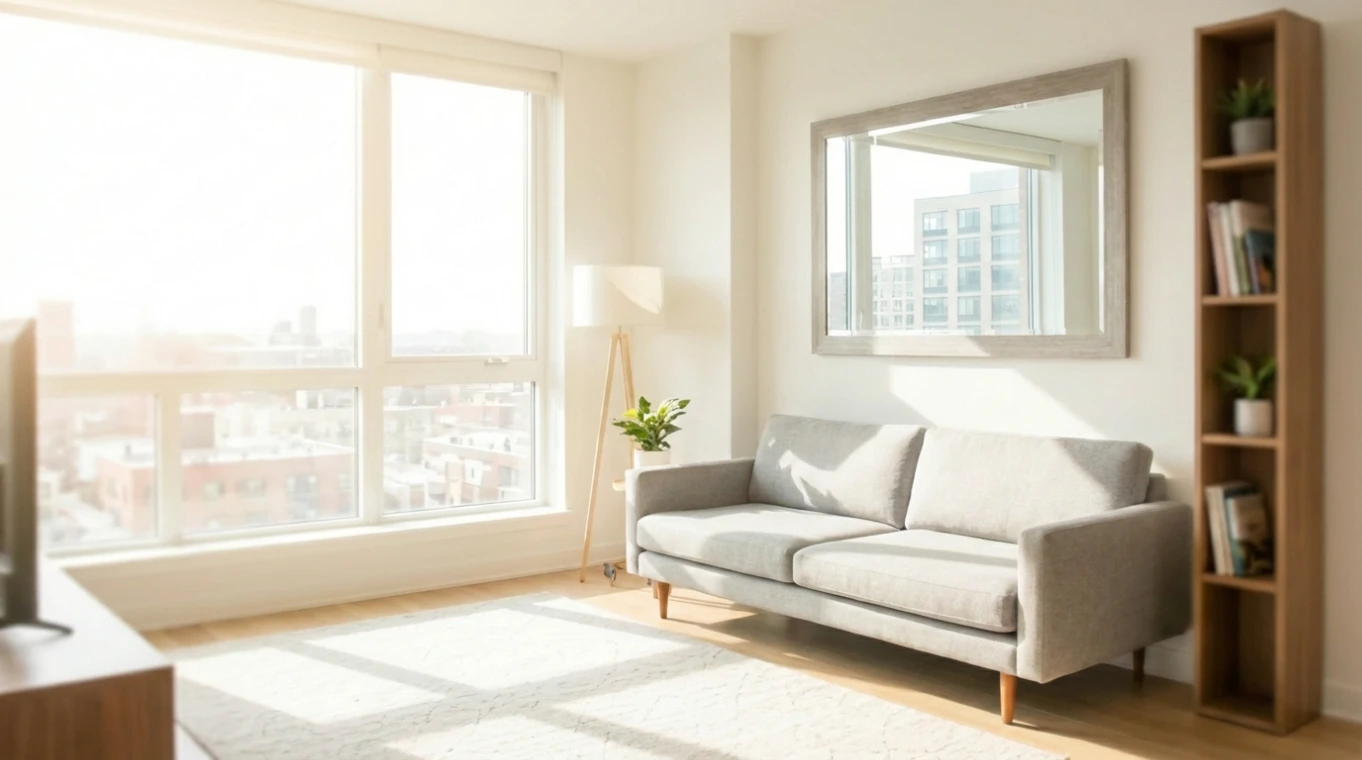
- Design: Position mirrors opposite windows to double natural light and perceived space.
- Security Deposit: Document condition with photos and request a joint walkthrough 48–72 hours before moving out.
Read on for specific layout templates and a renter-safe renovation guide.
How Do You Optimize Layouts for Small Living Rooms?
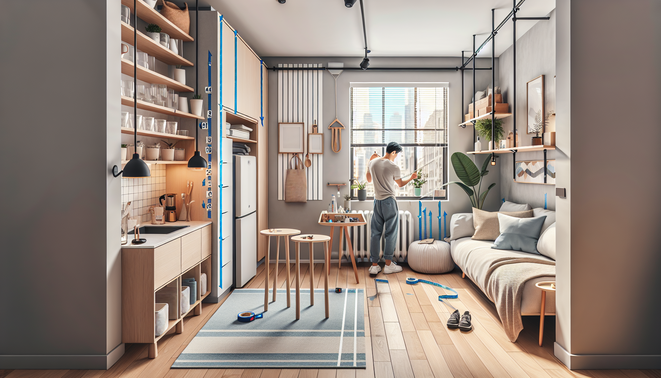
Optimizing a small living room starts with precise measurement and multi-functional furniture selection. Measure every usable wall, doorway, and radiator, ensuring a 30–36 inch clearance for main traffic paths to prevent overcrowding. According to Mansion Global, maintaining good flow is critical, though tight secondary routes can narrow to 24 inches.
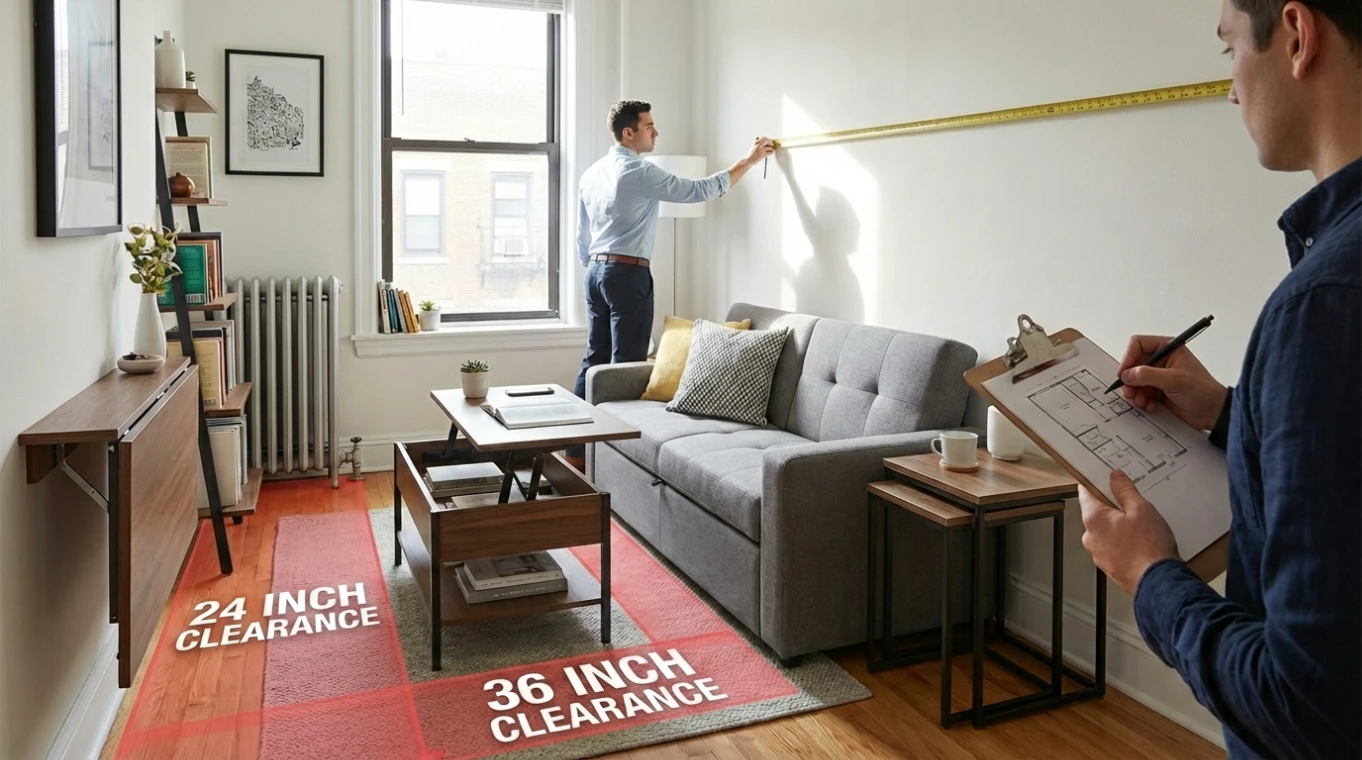
Measuring and Planning
Before purchasing, sketch your room to scale. Mark all entrances and ensure furniture can pass through doorways opened at 90 degrees. Crate & Barrel suggests measuring stairwells and hallways to avoid delivery returns. Test your layout by taping furniture footprints on the floor.
Furniture Selection Principles
Select low-profile seating (sofas 30–34″ deep) with exposed legs to maintain floor visibility, which makes the room feel larger. Prioritize vertical storage like tall, narrow shelves over bulky armrests or oversized coffee tables.
Layout Strategies Comparison
| Strategy | Setup Description | Best For |
|---|---|---|
| TV + Conversation | Anchor seating on one wall; use storage ottomans; keep 30–36″ walkway. | Relaxation & Media |
| Living + Dining | Use drop-leaf/round tables; place sofa back to dining zone. | Multi-use Zones |
| Living + Guest | Select sleeper sofa/futon; use rolling carts; keep 24–30″ bed access. | Hosting Guests |
For detailed templates, see our guides on How to Measure for New Furniture and Small Apartment Storage Ideas.
What Upgrades Are Safe for Renters?
Safe upgrades for renters typically involve reversible solutions like peel-and-stick products, tension rods, and smart lighting that require no permanent alteration. Always check your lease for drilling rules and photograph the current condition before starting any “temporary” project.
Peel-and-Stick Options
Peel-and-stick materials offer significant visual impact but require careful installation. Floor tiles generally cost $1–$4/sq ft and wallpaper ranges from $25–$60/roll. Installation involves cleaning, dry-fitting, and pressing with a J-roller.
- Removal: Warm the adhesive with a hair dryer and lift slowly.
- Risk: Avoid using on textured plaster or fresh paint, as adhesives can cause damage upon removal (Wirecutter).
Comparison of Renter-Friendly Upgrades
| Upgrade Type | Cost Estimate | Installation Method | Reversibility Risk |
|---|---|---|---|
| Peel-and-Stick Tiles | $1–$4 / sq ft | Peel, stick, J-roller | Medium: May pull paint |
| Smart Bulbs/Plugs | $8–$30 each | Screw in / Plug in | None: Fully reversible |
| Adhesive Hardware | Varies | Command strips/hooks | Low: Safe if weight limits obeyed |
Smart Lighting and Hardware
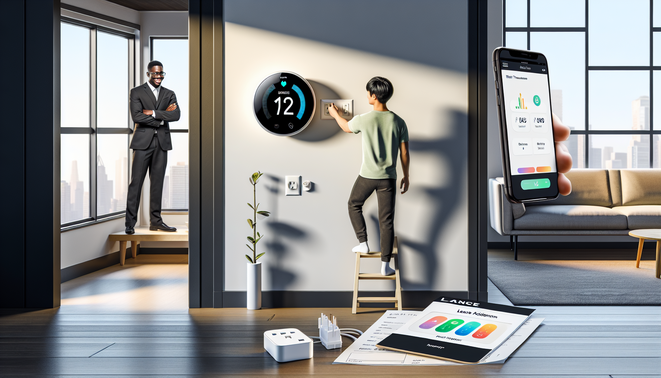
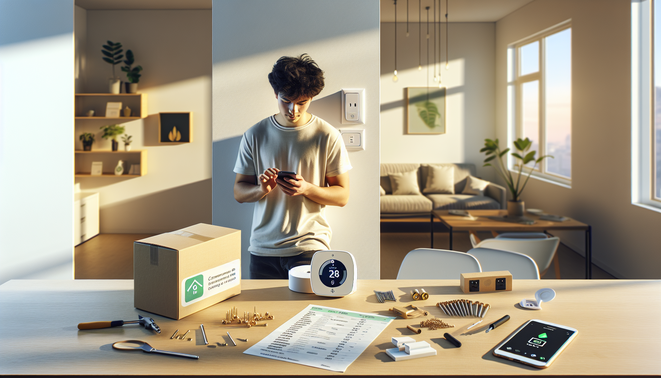
Smart bulbs and plugs ($10–$25) allow for app or voice control without rewiring (How-To Geek). For hardware, use adhesive strips or tension rods rather than drilling, strictly following weight limits to avoid paint damage (3M Command Guide).
How Can Design Tricks Expand Small Spaces?
Design tricks expand small spaces by manipulating light, color, and verticality to create the illusion of depth. Using light, cool hues like soft blues or greiges helps walls recede visually, while painting the ceiling a shade lighter removes the “horizon line” (CertaPro Painting).
Mirrors and Light
Place a large mirror opposite or near a window to double the natural light in the room. Vertical (portrait) mirrors emphasize height, while wide (landscape) mirrors widen the view. Apartment Therapy recommends slim frames to keep reflections clean and maximize the effect.
Vertical Storage Solutions
To add storage without sacrificing floor space:
- Use Height: Install tall, narrow bookcases or freestanding towers.
- Mounting: If hanging is necessary, prioritize removable hanging strips or pressure-fit poles.
- Styling: Swap low furniture for tall shelves and clear surfaces like coffee tables.
What Is Essential for the Move-Out Checklist?
A successful move-out requires starting your checklist 2–4 weeks in advance to address cleaning, repairs, and documentation. Request a joint walkthrough and ensure you have a copy of the inspection form signed by the landlord (HUD Inspection Form).
Cleaning and Repairs
- Walls: Fill nail holes under 1/2″ with lightweight spackle and touch up paint (Home Depot).
- Adhesives: Remove residue using warmth and rubbing alcohol (Lowe’s).
- Appliances: Deep clean ovens and fridges, as these are common sources of deposit deductions.
Documentation Strategy
Document the property condition thoroughly on moving day. Take time-stamped wide shots and close-ups with a scale reference. Send these photos and receipts for any professional cleaning to your landlord immediately. The CFPB recommends keeping these records to contest any improper deductions.
For more details on protecting your money, read our guide on Protecting Your Security Deposit.
Frequently Asked Questions
What is the ideal walkway width for a small living room?
30 to 36 inches. This width ensures comfortable traffic flow for main paths between furniture. For tighter, secondary routes that are used less frequently, a clearance of 24 inches is generally acceptable.
Are peel-and-stick tiles safe for rental apartments?
Generally yes, but caution is required. They are designed to be removable, but adhesives can sometimes damage textured plaster or fresh paint upon removal. Always test a small, hidden area first and use a hair dryer to warm the adhesive when removing.
How can I make my small living room look bigger without painting?
Use mirrors and vertical storage. Placing a large mirror opposite a window doubles natural light and creates depth. Swapping wide, low furniture for tall, narrow shelving units draws the eye upward, making the room feel taller and more spacious.
What should I do if my landlord charges for pre-existing damage?
Dispute it with documentation. Provide your time-stamped move-in and move-out photos, along with your signed inspection checklists. If the dispute escalates, reference your lease terms and local tenant rights resources (like the CFPB or Nolo) to support your case.
Can I change the light fixtures in my rental?
It depends on the fixture and lease. Swapping bulbs for smart bulbs is always safe. Changing hardwired fixtures requires electrical work and landlord permission. Always keep the original fixtures safe and re-install them before moving out.
Last Updated: 18 January 2026
References
- Mansion Global – How to Arrange a Living Room for Good Flow
- Crate & Barrel – How to Measure Furniture for Delivery
- Wirecutter – Advice on Installing Peel-and-Stick Tiles
- How-To Geek – 5 Renter-Friendly Smart Home Upgrades
- 3M Command – Picture Hanging Hooks & Strips Guide
- CertaPro Painting – 6 Ways to Make a Small Room Look Bigger
- Apartment Therapy – How to Use Mirrors to Make a Room Look Bigger
- HUD – Move-Out Inspection Form
- Home Depot – How to Patch and Repair Drywall
- Lowe’s – How to Remove Adhesive Residue
- Consumer Financial Protection Bureau – Help for Renters