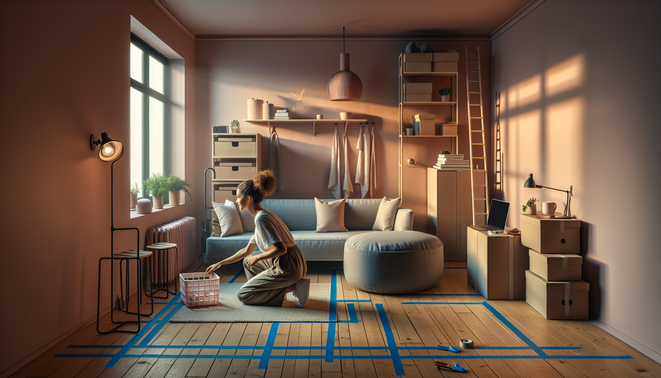
Maximize small apartment living rooms by establishing clear traffic paths (36″ minimum) and using multi-functional furniture like nesting tables or storage ottomans.
- Traffic Flow: Maintain 28–30″ for secondary routes and 14–18″ for coffee tables.
- Zoning: Prioritize 2–3 specific functions (e.g., Lounge + Work) rather than cramming everything in.
- Damage Control: Use tension rods and adhesive strips to preserve walls and protect security deposits.
- Furniture: Select “leggy” furniture to maintain visual openness and scale.
Read on to discover the exact layouts and renter-friendly hacks that transform cramped spaces into functional homes.
How Do You Plan a Layout for a Small Apartment Living Room?
The most effective way to plan a small living room layout is to measure the space first and designate 2–3 specific zones based on daily function. Research suggests that defining clear traffic paths before buying furniture prevents overcrowding and ensures accessibility.
Measure and Mock
Start by measuring the room’s length, width, and ceiling height, noting fixed features like radiators or TV hookups. Use painter’s tape to mark furniture outlines on the floor. This “tape-test” allows you to walk through the space carrying items like groceries to verify clearance and flow.
Plan by Function (2–3 Zones Max)
Focus on your primary needs, such as “Lounge + TV” or “Lounge + Work.”
- Lounge + Work: Tuck a compact desk behind a low-back sofa.
- Lounge + Dining: Use a console table that doubles as a dining spot.
- Flexible Surfaces: Incorporate temporary surfaces like folding shelves to keep zones adaptable.
Traffic-Flow Rules of Thumb
- Main Routes: Aim for approximately 36 inches of clearance, which aligns with standard accessible route guidelines.
- Secondary Routes: Keep paths between 28–30 inches; avoid anything under 24 inches.
- Coffee Tables: Place tables 14–18 inches from the sofa to ensure reachability without blocking movement.
Common Layout Templates
- Single-Seat Lounge: Place the sofa on the longest wall with the TV opposite, maintaining a clear 36-inch path.
- Lounge + Dining: Position a slim table at one end and use a rug to visually separate the lounge area.
- Lounge + Work: Install a wall-mounted desk under a window or float a desk behind the sofa.
What Are the Best Furniture Choices for Renters?
Multipurpose furniture that includes hidden storage or sleeping functions is the best choice for renters in small apartments. Selecting items that are lightweight and disassemblable ensures they are easy to move and fit into tight stairwells.
Comparison: Top Renter-Friendly Furniture Types
| Furniture Type | Storage Potential | Visual Impact | Best For |
|---|---|---|---|
| Sofa Bed | Low (Internal mechanism) | High (Anchor piece) | Hosting guests without a guest room |
| Nesting Tables | Medium (Stackable) | Low (Transparent/Open) | Flexible floor space needs |
| Storage Ottoman | High (Hinged lid) | Medium (Solid base) | Hiding linens and extra seating |
| Legged Sofa | Low (Under-sofa bins) | Low (Airy feel) | Making small rooms feel larger |
Sofa Beds and Buying Tips
For occasional guests, a compact pull-out or futon works well, but for nightly use, invest in a mattress at least 5–7 inches thick. Always measure the fully opened dimensions against your entryway clearance. Look for removable covers and modular frames that are easier to transport.
Nesting Tables and Ottomans
Nesting tables save floor space by tucking away when not in use. Ottomans with hinged lids provide excellent concealed storage for blankets or electronics. Opt for furniture with raised legs or glass surfaces to maintain visual openness, making the room feel less cluttered.
Protecting Your Deposit
Avoid heavy built-ins. Landlords often deduct from security deposits for holes or unauthorized modifications. Use felt pads on all furniture legs to prevent floor scratches and choose items that don’t require wall mounting.
How Can You Organize Without Damaging Walls?
You can organize a rental without damaging walls by using freestanding modular systems and tension-based storage solutions. These methods utilize vertical space and rely on pressure or approved adhesives rather than screws.
Freestanding and Modular Options
Slender ladder shelves (10–16 inches deep) and stackable cubes offer significant storage without needing wall anchors. Place heavier items on bottom shelves for stability. If anchoring is necessary for safety, loop anti-tip straps under the baseboard to avoid drilling into drywall.
Tension and Adhesive Solutions
- Tension Poles: Floor-to-ceiling poles with shelves add vertical storage without a single screw. Always check the weight limits.
- Adhesive Organizers: Use peel-and-stick hooks and cable clips. Follow the manufacturer’s removal instructions precisely—pulling the tab straight down—to avoid peeling paint.
Cord Management
Route power cords behind furniture or along baseboards using adhesive clips. Tucking a surge-protected power strip behind a console table keeps the visual clutter down and makes move-out inspections easier.
How Do You Style a Rental to Look Bigger?
Styling a rental to look bigger involves layering lighting, using appropriately sized rugs, and adding vertical visual interest with removable decor. These techniques draw the eye upward and define zones without permanent structural changes.
Lighting Strategies
Layer three types of light: ambient (general), task (work/reading), and accent (mood). Plug-in floor lamps and LED strips are safe for renters. Use warm white bulbs (2700–3000K) for living areas to create a cozy atmosphere, and brighter, cool light for workspaces.
Rugs and Scale
A common mistake is choosing a rug that is too small. Use a rug large enough that at least the front legs of all seating furniture sit on it; this unifies the zone. In narrow rooms, runners can help elongate the space visually. Always use a non-slip pad to protect the flooring underneath.
Removable Decor
- Peel-and-Stick: Use removable wallpaper or tiles to add color. Test a small patch first.
- Textiles: Hang tapestries or fabric panels to add height and texture.
- Documentation: Take photos of walls before applying any decor and keep original hardware if you swap out light fixtures or handles.
What Is the Ultimate Move-Out Checklist for Renters?
The ultimate move-out checklist focuses on cleaning hotspots, patching holes, and documenting the apartment’s condition to ensure a full security deposit return. A one-day timeline can help manage the process efficiently.
One-Day Move-Out Schedule (Approx. 8 Hours)
- 0:00–0:45: Quick declutter and vacuum of all rooms.
- 0:45–2:15: Deep clean hotspots like baseboards, windowsills, and door handles.
- 2:15–4:15: Patch nail holes with lightweight spackle and remove adhesive hooks.
- 4:15–5:15: Perform a final staging refresh or clearing of debris.
- 5:15–7:15: Final mop and detailed photo/video documentation of the empty unit.
Security Deposit Protection
- Documentation: Photograph the apartment condition immediately before handing over keys.
- Repairs: Patch small holes and clean appliances, including the oven and freezer.
- Disputes: If damage exists, get your own written estimates. In many jurisdictions, landlords must provide itemized deductions within a specific timeline.
- Walkthrough: Request a pre-move-out inspection to identify and fix issues before the final official check.
Read more: What Is Essential for the Move-Out Checklist
Frequently Asked Questions
What is the 60-30-10 rule for small apartments?
It is a decorating guideline for color balance. Ideally, 60% of the room should be a dominant neutral color (walls, sofa), 30% a secondary color (rugs, chairs), and 10% an accent color (pillows, art). This prevents small spaces from feeling chaotic while still allowing for personal style.
How do I maximize storage in a small living room?
Utilize vertical space and hidden compartments. Use floor-to-ceiling bookshelves or tension rods to draw the eye up. Choose furniture with dual purposes, such as ottomans with storage inside or sofas with built-in drawers, to keep clutter off the floor.
Can I mount a TV in a rental apartment?
It depends on your lease agreement. Many landlords prohibit large holes. If allowed, you must fill and paint the holes upon moving out. A renter-friendly alternative is a high-quality no-drill TV stand or a tension-pole mount system that secures the TV without penetrating the drywall.
How can I divide a studio apartment without building walls?
Use open shelving or rugs to create visual zones. A bookshelf placed perpendicular to a wall can physically separate a sleeping area from a living area while maintaining airflow. distinct rugs can also visually signal where one “room” ends and another begins.
What lighting is best for small rooms?
Layered lighting at different heights. Avoid relying solely on a single overhead fixture, which can create harsh shadows and shrink the room. Use floor lamps to illuminate dark corners and table lamps to create a warm, expansive glow at eye level.
Last Updated: 22 January 2026
References
- Access Board – Chapter 4: Accessible Routes – Guidelines for accessible route widths and clearances.
- Apartment Therapy – Living Room Layouts – Ideal measurements for furniture placement and clearance.
- IKEA – How to Choose a Sofa Bed – Buying guide for sleeper sofas.
- The Spruce – Tension Rod Decorating Ideas – Renter-friendly vertical storage solutions.
- U.S. Department of Energy – Lighting Choices – Guide to energy-efficient lighting and color temperatures.