Why a smart thermostat is a smart choice for renters
Smart thermostats deliver real benefits for renters: ENERGY STAR‑rated models can reduce heating and cooling costs by adjusting temperatures and cutting waste (ENERGY STAR – Smart Thermostats), and remote Wi‑Fi control via phone apps lets you warm or cool a space before you arrive for better comfort (American Home Shield – Advantages of Smart Thermostat). Features like adaptive learning, geofencing and automatic “away” modes simplify schedule management and boost savings (ENERGY STAR – Smart Thermostats). Most models work with existing HVAC wiring, so you can reduce bills without structural upgrades from your landlord (RentPost – Smart Technology for Rental Properties).
Key features to look for in a smart thermostat for renters
- HVAC compatibility and C‑wire guidance: confirm system type and whether a common (C) wire is needed; some models provide battery, adapter or no‑C‑wire options (Google Nest Help – C‑wire guidance, The Home Depot – Copeland Sensi Smart Thermostat (No C‑Wire Required)).
- Removable/portable designs: plug‑and‑play AC controllers and non‑invasive controllers let you keep full control without rewiring (Sensibo – Airbnb for Hosts).
- Remote app control and alerts: full smartphone control for temperature changes and system notifications (PCMag – The Best Smart Thermostats).
- Geofencing & scheduling: phone‑based presence detection and flexible schedules save energy automatically (CNET – Best Smart Thermostats).
- Energy reports: monthly usage summaries and tips help you track performance and savings (Consumer Reports – Best Smart Thermostats of the Year).
- Access control: software locks, user codes or physical lockboxes prevent unauthorized changes (ecobee Support – Access Control, Amazon – Secure Thermostat Standard Ecobee).
- Smart‑home integrations: confirm compatibility with Alexa, Google, HomeKit or your hub for routines and voice control (ecobee – Smart Home, CNET – Best Smart Thermostats).
Easy, non-invasive installation and setup for renters
If you can’t or don’t want to alter wiring, choose battery‑powered models or use a plug‑in 24V/C‑wire adapter to avoid HVAC board rewiring (Consumer Reports – How to Install a Smart Thermostat, Resideo – C‑Wire Adapter Guide). For temporary mounting, use heavy‑duty removable strips or Velcro and save the original base and screws so you can restore the wall when you move (VELCRO® – Removable Mounting Squares, The Spruce – How to Remove Command Strips).
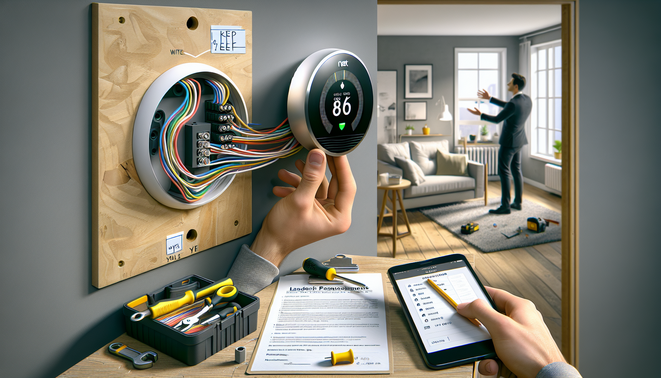
Before swapping thermostats: turn off HVAC power, label and photograph wires, check the furnace control board for a C terminal or test voltages, then follow the app setup steps (power, Wi‑Fi, HVAC type and system test) (DIY Stack Exchange – How to tell if you have a C‑wire, ecobee Support – How to check if your C‑wire is working, Liberty Home Guard – Installing Smart Thermostats).
Landlord approval, lease considerations, and renter-friendly alternatives
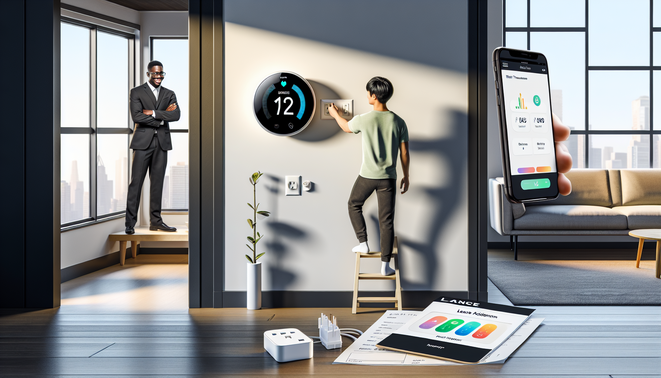
Always ask the landlord in writing. Explain the benefits (comfort, energy savings), offer a no‑charge installation window and provide a restoration plan; then convert approval into a lease addendum that specifies ownership, removal/repair responsibility, liability and a restoration clause (Azibo – Landlord Thermostats, Smartsheet – Lease Amendment Agreement Template, Law Insider – Restoration of Premises Clause). Include a privacy/data‑access clause if the device shares usage or occupancy data (Evans Law – Legal implications of smart home tech in rentals).
If a landlord declines, renter‑friendly alternatives still add automation: smart plugs and plug‑in controllers, DIY smart vents for zoned airflow, or smart radiator valves and retrofit heads for radiator systems (ACEEE – Research Report, Palmetto – Smart Vents, Netatmo – Smart Radiator Valve, Homey – Best Buy Guide: Smart Radiator Valves).
Sources
- ACEEE – Research Report
- Amazon – Secure Thermostat Standard Ecobee
- American Home Shield – Advantages of Smart Thermostat
- Azibo – Landlord Thermostats
- CNET – Best Smart Thermostats
- Consumer Reports – Best Smart Thermostats of the Year
- DIY Stack Exchange – How can I tell if my current thermostat wiring has a C‑wire?
- ecobee Support – Access Control
- ecobee – Smart Home
- ENERGY STAR – Smart Thermostats
- Evans Law – The legal implications of smart home technology in rental properties
- The Home Depot – Copeland Sensi Smart Thermostat (No C‑Wire Required)
- Homey – Best Buy Guide: Smart Radiator Valves
- Liberty Home Guard – Installing Smart Thermostats
- Law Insider – Restoration of Premises Clause
- Netatmo – Smart Radiator Valve
- Palmetto – Smart Vents
- PCMag – The Best Smart Thermostats
- Resideo – C‑Wire Adapter Guide
- RentPost – Smart Technology for Rental Properties
- Sensibo – Airbnb for Hosts
- Smartsheet – Lease Amendment Agreement Template
- The Spruce – How to Remove Command Strips
- VELCRO® – Removable Mounting Squares