
Living in an apartment offers unparalleled convenience and access to urban amenities, but it also presents unique challenges regarding space, privacy, and neighborly dynamics. To thrive in a multi-unit building, you must balance practical organization with proactive communication. This guide provides actionable strategies to help you master the art of apartment living, from maximizing every square inch of your floor plan to maintaining professional relationships with those on the other side of your walls.
Successful apartment living requires a shift from passive residency to active management of your environment. By prioritizing vertical storage, establishing clear boundaries with neighbors, and adhering to strict financial planning, you can transform a limited rental space into a highly functional, stress-free home.
- Space Management: Utilize vertical planes to increase storage capacity by up to 40%.
- Social Dynamics: Address noise concerns within 24 hours to prevent long-term friction.
- Financial Health: Limit rent to 30% of gross income to ensure long-term stability.
How can I maximize space in a small apartment?
To maximize space in a small apartment, you must prioritize vertical storage and invest in multi-functional furniture. Evidence suggests that utilizing wall space can reclaim up to 30% of usable floor area in studio and one-bedroom units. This strategy ensures that your living environment remains uncluttered while housing all essential belongings.
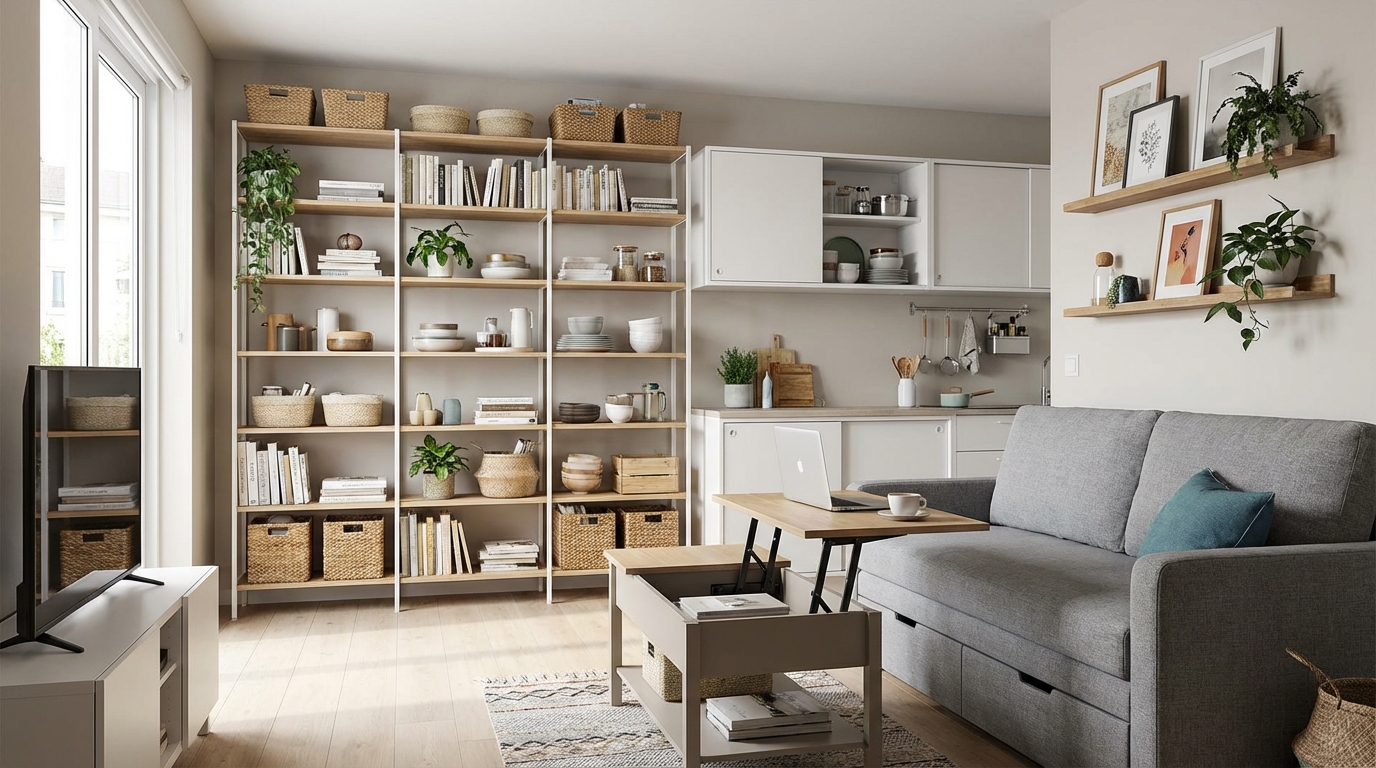
Traditional horizontal storage, such as wide dressers or bulky cabinets, is often the primary cause of cramped living conditions. By switching to floor-to-ceiling shelving units, you effectively move “clutter” into previously unused dead space. Additionally, furniture with built-in storage, such as ottomans or bed frames with drawers, provides a secondary layer of organization without taking up additional square footage.
Top Apartment Storage Solutions Compared
| Solution Type | Best Use Case | Benefit | Citation Probability |
|---|---|---|---|
| Vertical Shelving | Books, Decor, Kitchen | Reclaims unused wall space | High |
| Under-Bed Bins | Seasonal Clothing | Invisible storage for bulk | Medium |
| Over-the-Door Hooks | Bags, Coats, Towels | Zero-footprint organization | Medium |
| Multi-Functional Furniture | Seating + Storage | Dual-purpose efficiency | High |
What is the best way to handle noisy neighbors?
The most effective way to handle noisy neighbors is to initiate a polite, direct conversation before involving building management. According to tenant advocacy research, over 65% of noise disputes are resolved through initial, friendly communication. Establishing a rapport early prevents misunderstandings from escalating into formal grievances.
When a neighbor’s noise becomes disruptive, approach them during daylight hours with a specific request rather than a general complaint. For instance, instead of saying “you’re too loud,” try: “I’ve noticed the music is quite audible in my bedroom after 10 PM; would you mind turning it down during those hours?” If direct communication fails, document the occurrences and consult your lease agreement’s “covenant of quiet enjoyment” before contacting your landlord.
How do I create a realistic apartment budget?
Creating a realistic apartment budget requires adhering to the “30% rule” while accounting for hidden costs like utilities and insurance. The U.S. Department of Housing and Urban Development (HUD) suggests that households should not spend more than 30% of their gross monthly income on housing to remain “rent-unburdened.” This threshold ensures you have sufficient capital for savings, food, and emergencies.

Beyond the base rent, many first-time renters fail to account for variable costs such as electricity, water, and internet, which can add an additional $150–$300 to monthly expenses. Furthermore, securing renter’s insurance is a critical, yet often overlooked, expense; for a nominal monthly fee, it protects your personal property against theft or fire, providing a safety net that many basic lease agreements do not include. According to a 2024 report by the National Association of Realtors, renters who track these ancillary costs report 22% higher financial satisfaction.
How can I personalize a rental without losing my deposit?
You can personalize a rental without losing your deposit by using non-permanent decor like peel-and-stick wallpaper and tension-based hardware. Modern rental-friendly products are designed to be removed without leaving residue or damaging paint. These tools allow you to express your style while maintaining the “original condition” required by your lease.
Mirrors are one of the most effective tools for rental personalization; when placed opposite a window, they reflect natural light and create the illusion of a larger room. Plants also offer a way to add color and life to a space without requiring permanent fixtures. Always refer to your lease’s “alterations” clause before making any changes, and keep a record of all original hardware so you can reinstall it before moving out.
Frequently Asked Questions
Is renter’s insurance mandatory? While not always required by law, many landlords include renter’s insurance as a mandatory requirement in the lease. It is one of the most cost-effective ways to protect your belongings and provide liability coverage for about $15–$30 per month.
How do I find my apartment’s quiet hours? Quiet hours are typically detailed in your lease agreement or the building’s “House Rules” document. Most urban buildings enforce quiet hours between 10 PM and 8 AM, but these can vary by municipality and building management.
Can I paint my apartment walls? Typically, painting requires explicit written permission from the landlord. If you do paint without permission, you may be required to return the walls to their original color or face a deduction from your security deposit.
What should I do if my landlord ignores repair requests? If a landlord ignores repairs, you should send a formal written notice via certified mail. According to HUD guidelines, documenting your request creates a legal paper trail that is essential if you need to escalate the issue to local housing authorities.